Play Therapy
Hope Kids provides affordable, inclusive, and professional education for children with autism and special needs in Phnom Penh and across Cambodia.
Play Therapy

Helping Children Communicate, Express, Learn, and Grow Through Play
What Is Play Therapy?
Play Therapy Activities
- Depending on the therapeutic approach and child's goals, play may involve:
- • Pretend and imaginative play
- • Dolls, puppets, or figures
- • Storytelling
- • Drawing and creative activities
- • Games
- • Role-play
- • Sand or sensory-based activities
- • Cooperative play
- • Problem-solving activities
Who Can Benefit From Play Therapy?
Play Therapy may be appropriate for children experiencing a range of emotional, social, developmental, communication, or behavioral difficulties. This may include children with autism, ADHD, developmental delays, communication difficulties, social interaction difficulties, emotional regulation difficulties, behavioral challenges, difficulty with play or peer interaction, or those experiencing significant changes or stressful life experiences. However, Play Therapy is not automatically appropriate for every child with a particular diagnosis.

Autism Spectrum Condition
Children with ASC and communication or social needs.

ADHD
Children with attention and regulation challenges.

Developmental Delays
Children showing delays in milestones.

Communication Difficulties
Children needing support with expression and interaction.

Emotional Regulation
Children needing support with emotions and behavior.

Social Interaction
Children needing support with peer interaction and play.

Behavioral Challenges
Children needing support with behavior and participation.

Stressful Life Experiences
Children experiencing significant changes or stress.
Why Is Play Important for Children's Development?
Communication
Children can practice expressing wants, needs, ideas, feelings, and experiences.
Social Skills
- Play provides opportunities to practice:
- • Turn-taking
- • Sharing
- • Cooperation
- • Joint attention
- • Social communication
- • Negotiation
- • Playing with others
Emotional Development
Children can explore emotions and practice ways of expressing and managing feelings.
Problem-Solving
Play allows children to experiment, make choices, try different solutions, and learn from outcomes.
Executive Functioning
- Play can provide opportunities to develop:
- • Attention
- • Working memory
- • Flexible thinking
- • Planning
- • Inhibitory control
- • Self-regulation
What Can Play Therapy Help With?
The goals of Play Therapy are individualized. Depending on the child, therapy may support emotional development, social development, communication, cognitive and learning skills, and confidence and independence.
Emotional Development
Children may work on identifying emotions, expressing feelings, understanding emotional experiences, developing coping strategies, managing frustration, coping with changes, and communicating when they need help.
Social Development
Play can provide opportunities to practice turn-taking, sharing, cooperation, initiating interaction, responding to others, joint attention, participating in group activities, and developing social communication.
Communication
Play can support expressive communication, functional communication, listening and responding, requesting, conversation, non-verbal communication, and social communication. Children who use AAC, pictures, gestures, signs, or other communication methods can also participate in play-based activities using their preferred communication system.
Cognitive & Learning Skills
Play can provide opportunities to practice problem-solving, attention, planning, decision-making, flexible thinking, following rules and routines, and learning through exploration.
Confidence & Independence
Children can develop confidence by making choices, trying new activities, solving problems, and experiencing success within a supportive environment.
Play Therapy for Children With Autism
What Happens During a Play Therapy Session?
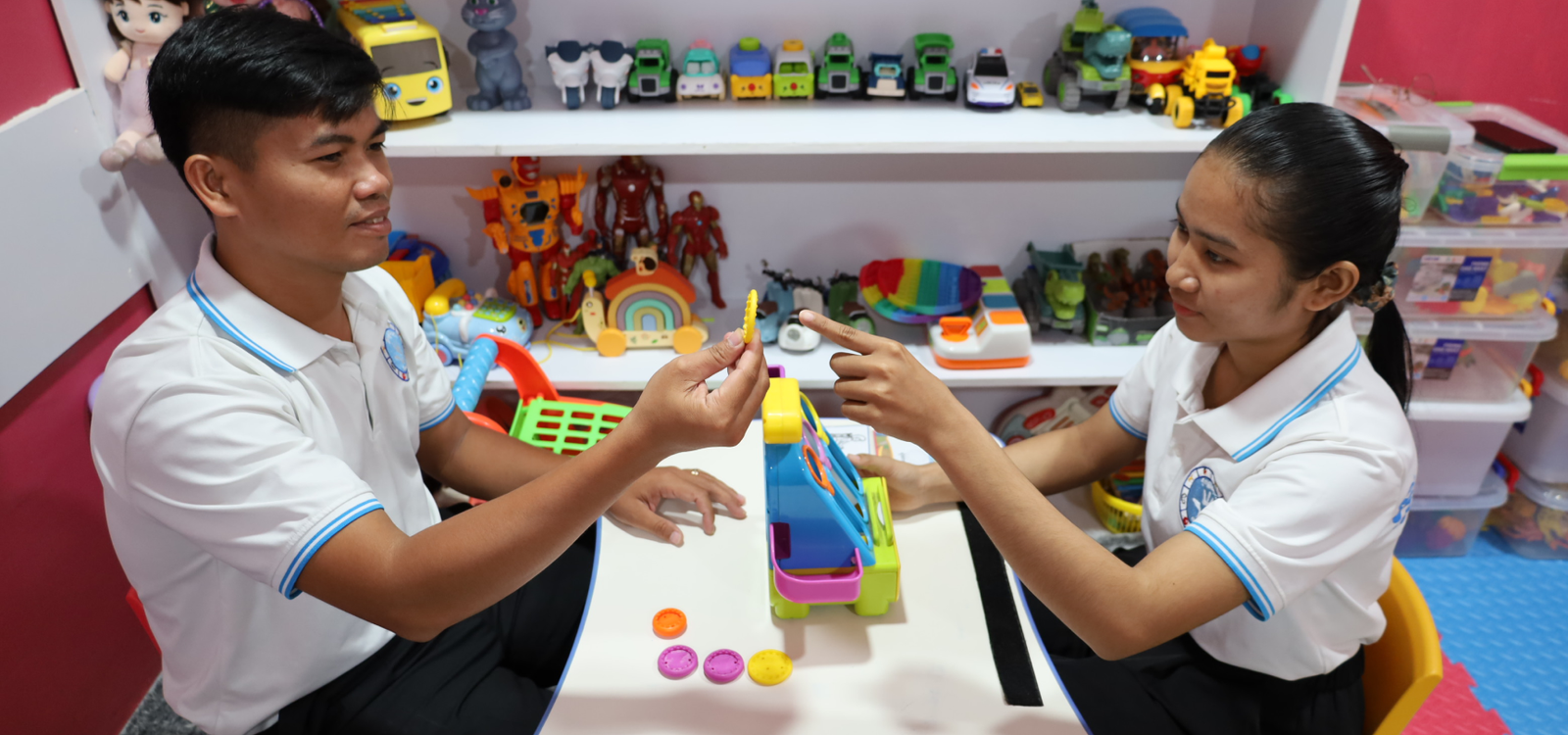
There is no single way that a Play Therapy session looks because the approach depends on the child's age, developmental level, needs, and therapeutic goals. A session may include imaginative play, creative activities, games, role-play, cooperative play, and child-led play. The therapist then uses these opportunities intentionally to work toward the child's individual goals.
Imaginative Play
Children may use pretend scenarios, dolls, puppets, or figures to explore relationships, emotions, and experiences.
Creative Activities
Drawing, art, storytelling, and construction activities can provide opportunities for communication and self-expression.
Games
Games can support turn-taking, flexibility, communication, problem-solving, and following rules.
Role-Play
Children can practice different social or everyday situations in a safe and supported environment.
Cooperative Play
Children can practice interacting with another person, sharing attention, negotiating, and working together.
Child-Led Play
Following a child's interests can provide valuable opportunities to understand their communication style, preferences, strengths, and experiences. The therapist then uses these opportunities intentionally to work toward the child's individual goals.
How Does Hope Kids Use Play Therapy?
At Hope Kids Special Education School in Phnom Penh, play is used purposefully to support children's individual developmental and therapeutic goals. Our approach may include individualized assessment, individualized goals, child-centred engagement, guided and structured play, functional skills, parent collaboration, and progress monitoring. The aim is not simply to make therapy enjoyable. It is to use play meaningfully to help children communicate, participate, develop relationships, manage everyday challenges, and build skills that matter in their lives.
Individualized Assessment
We consider the child's developmental level, communication, social, emotional, behavioral, and learning needs.
Individualized Goals
Play activities are selected according to the skills the child is working toward.
Child-Centred Engagement
Children's interests, preferences, and strengths are incorporated wherever appropriate.
Guided & Structured Play
Children receive the level of support they need to practice new skills while gradually developing greater independence.
Functional Skills
Play can be used to practice skills that are meaningful in everyday life, including communication, social interaction, emotional regulation, problem-solving, and participation.
Parent Collaboration
Parents and caregivers may receive practical strategies for supporting communication, emotional development, social interaction, and play at home.
Progress Monitoring
Goals and intervention strategies are reviewed according to the child's development and response to intervention.
Why Play Therapy at Hope Kids?
At Hope Kids Special Education School, we recognize that children communicate and learn in different ways. For many children, play provides a natural pathway for communication, connection, exploration, emotional expression, learning, and skill development. Our approach combines purposeful play with individualized developmental goals and, where appropriate, other educational and therapeutic services.
Purposeful Play
Play is used intentionally to support developmental and therapeutic goals.
Individualized Goals
Play activities are matched to each child's unique needs and goals.
Child-Centred
Children's interests and preferences guide the therapeutic process.
Professional Training
Led by professionals with specialized play therapy training and certification.
Integrated Services
Play Therapy may be coordinated with OT, speech therapy, ABA, TEACCH, and early intervention.
Meaningful Outcomes
The aim is to help children communicate, participate, develop relationships, and build skills that matter in their lives.
Frequently Asked Questions About Play Therapy
Play Therapy in Phnom Penh, Cambodia
If your child is experiencing difficulties with communication, social interaction, emotional regulation, play, behavior, learning, or developmental skills, Play Therapy may provide a meaningful way to support their development. Hope Kids Special Education School provides individualized Play Therapy and developmental support for children in Phnom Penh, Cambodia. Depending on the child's needs, Play Therapy may be coordinated with Early Intervention, Special Education, Speech and Language Therapy, Occupational Therapy, ABA and Behavioral Support, Structured Teaching (TEACCH), and other developmental services.
Contact UsContact Hope Kids
If your child is experiencing difficulties with communication, social interaction, emotional regulation, play, behavior, learning, or developmental skills, Play Therapy may provide a meaningful way to support their development. Contact Hope Kids to learn more.