Art Therapy
Hope Kids provides affordable, inclusive, and professional education for children with autism and special needs in Phnom Penh and across Cambodia.
Art Therapy
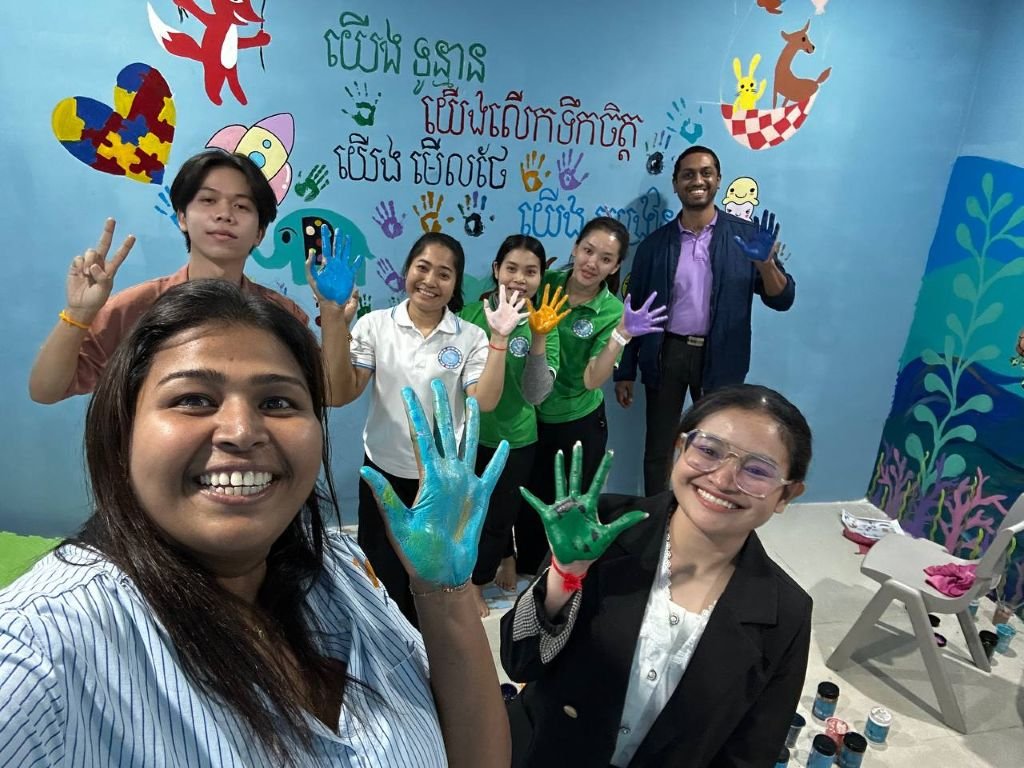
Supporting Self-Expression, Emotional Development, and Creativity Through Art
What Is Art Therapy?
Art Therapy Activities
- Depending on the child's needs and goals, sessions may include:
- • Drawing and coloring
- • Painting
- • Clay or modeling activities
- • Collage and craft activities
- • Sensory art experiences
- • Story-based art activities
- • Drawing emotions or experiences
- • Creative games and structured art activities
- • Individual or small-group creative activities
Who Can Benefit From Art Therapy or Art-Based Therapeutic Activities?
Art-based therapeutic approaches may be considered for children who have difficulty expressing thoughts or feelings verbally, experience emotional or social difficulties, have developmental differences, have communication difficulties, have difficulty identifying or communicating emotions, need support developing coping strategies, experience difficulties with social interaction, benefit from creative and experiential learning, or need additional opportunities for self-expression. Art-based activities may also be incorporated into support for children with Autism Spectrum Condition, ADHD, developmental delays, or other learning and developmental needs. However, art therapy is not automatically appropriate for every child or every difficulty.

Emotional Expression
Children who find it difficult to express feelings verbally.

Communication Difficulties
Children needing alternative ways to communicate.

Social Interaction
Children needing support with social participation.

Developmental Needs
Children with developmental differences or delays.

Autism Spectrum Condition
Children with ASC who may benefit from creative expression.

ADHD
Children with attention and regulation challenges.

Creative Learning
Children who benefit from experiential and creative learning.

Self-Expression
Children needing additional opportunities for expression.
Art Activities vs. Art Therapy
How Can Art Support Child Development?
Art can give children another way to communicate, explore experiences, and participate in meaningful activities. For some children, putting a feeling into words can be difficult. Drawing, painting, modeling, collage, and other creative activities can provide additional ways to express ideas and experiences. Art-based therapeutic activities can also create opportunities to practice communication, attention, social interaction, emotional awareness, and fine motor skills.
Emotional Expression
Some children find it easier to communicate through pictures, colors, movement, or creative activities than through direct conversation. Art can provide an additional channel for exploring and communicating feelings. For example, a child might be invited to draw what a particular emotion feels like, create a picture about something that happened during the day, choose colors that represent different feelings, or make a story using drawings or characters.
Communication and Self-Expression
Creative activities can create natural opportunities for children to communicate. A therapist may encourage a child to request materials, make choices, label objects or colors, describe what they are creating, answer questions, tell a story, share ideas, comment on another person's artwork, or communicate preferences. For children who use AAC, gestures, signs, pictures, or other forms of communication, art activities can also provide meaningful contexts for practicing functional communication.
Emotional Awareness and Regulation
Art-making can provide structured opportunities to explore emotions and coping strategies. Activities might include identifying different emotions, creating visual representations of feelings, or making something connected to a calming strategy. For some children, the sensory and repetitive aspects of creative activities may also make participation more comfortable and engaging.
Confidence and Sense of Achievement
Creative activities can give children opportunities to make choices, complete tasks, experiment, and see the results of their efforts. Therapists can focus on trying something new, making independent choices, completing a manageable activity, communicating preferences, persisting when an activity becomes challenging, and recognizing personal strengths. The emphasis is on participation and progress rather than artistic performance.
Social Development
Art can also provide a structured context for social interaction. Small-group activities may give children opportunities to practice sharing materials, waiting for a turn, requesting help, working alongside peers, following group routines, giving and receiving feedback, respecting another person's ideas, and participating in a shared project. For children who find unstructured social situations difficult, a shared activity can provide a clear and meaningful context for practicing interaction.
Fine Motor and Visual-Motor Skills
Many art activities naturally involve hand and finger movements. Drawing, coloring, painting, cutting, gluing, and manipulating clay can provide opportunities to practice hand strength, pencil and tool control, hand-eye coordination, bilateral coordination, fine motor precision, visual-motor integration, and manipulation of materials. When these skills are a therapeutic goal, art activities may complement occupational therapy rather than replace it.
How Hope Kids Uses Art Therapeutically
At Hope Kids, art-based activities are adapted to each child's developmental level, interests, communication abilities, and individual goals. The emphasis is not on producing a "perfect" picture. Instead, the focus is on the child's participation, self-expression, exploration, and development. Our approach may include individualized assessment, personalized activities, child-led exploration, individual and small-group activities, and integration with other services such as Speech & Language Therapy, Occupational Therapy, Play Therapy, Special Education, and behavioral support.
Individualized Assessment
We consider the child's developmental level, communication style, interests, strengths, challenges, and current goals. Where appropriate, art-based activities are incorporated into the child's wider therapeutic or educational plan.
Personalized Activities
Activities and materials are selected according to the child's abilities and interests. A child who enjoys sensory exploration may engage differently from a child who prefers drawing, storytelling, or structured crafts.
Child-Led Exploration
Children are given opportunities to make choices and explore materials at an appropriate level of independence. The therapist provides structure and support while allowing room for creativity and individual expression.
Individual and Small-Group Activities
Depending on the child's goals, creative activities may take place individually or in a small group. Group activities can provide opportunities to practice communication, cooperation, and social participation.
Integration With Other Services
Art-based activities can complement other developmental services when appropriate. For example, art can provide meaningful contexts for requesting and describing in Speech & Language Therapy, or practice fine motor skills in Occupational Therapy.
Why Choose Hope Kids for Art Therapy?
At Hope Kids, we adapt activities to each child's developmental level, strengths, interests, and individual goals. Children are encouraged to explore and create without pressure to produce a particular type of artwork. Art-based activities can complement the work of our special education and therapy teams, helping connect emotional, communication, developmental, and functional goals. Parents can learn simple ways to use creative activities at home to encourage communication, connection, choice-making, and self-expression.
Child-Centered Approach
We adapt activities to each child's developmental level, strengths, interests, and individual goals.
Supportive Environment
Children are encouraged to explore and create without pressure to produce a particular type of artwork.
Multidisciplinary Support
Art-based activities can complement special education and therapy teams, connecting emotional, communication, developmental, and functional goals.
Meaningful Participation
We look beyond the finished artwork and consider how the child communicates, participates, makes choices, interacts with others, and develops new skills.
Family Partnership
Parents can learn simple ways to use creative activities at home to encourage communication, connection, choice-making, and self-expression.
Focus on Process
The emphasis is on participation and progress rather than artistic performance or producing a perfect picture.
Frequently Asked Questions
Contact Hope Kids
If you would like to learn more about Art Therapy and creative therapeutic activities for children in Phnom Penh, contact Hope Kids to discuss your child's individual needs. Our approach is centered on understanding each child as an individual and selecting activities that are meaningful, developmentally appropriate, and connected to their broader goals for communication, participation, learning, independence, and wellbeing.
Contact UsContact Hope Kids
If you would like to learn more about Art Therapy and creative therapeutic activities for children in Phnom Penh, contact Hope Kids to discuss your child's individual needs.