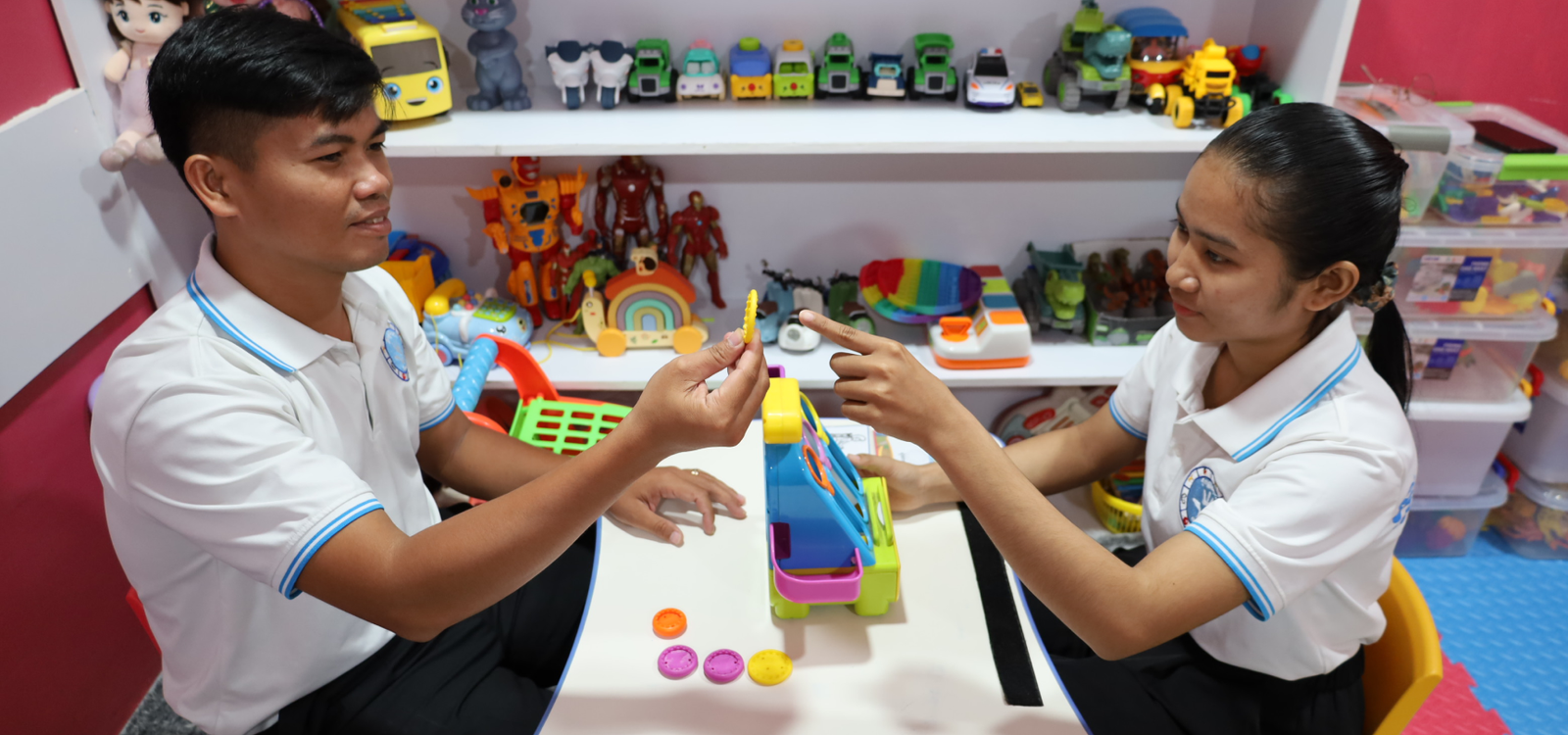
Cerebral Palsy Development Program
Hope Kids provides affordable, inclusive, and professional education for children with autism and special needs in Phnom Penh and across Cambodia.
Cerebral Palsy Development Program
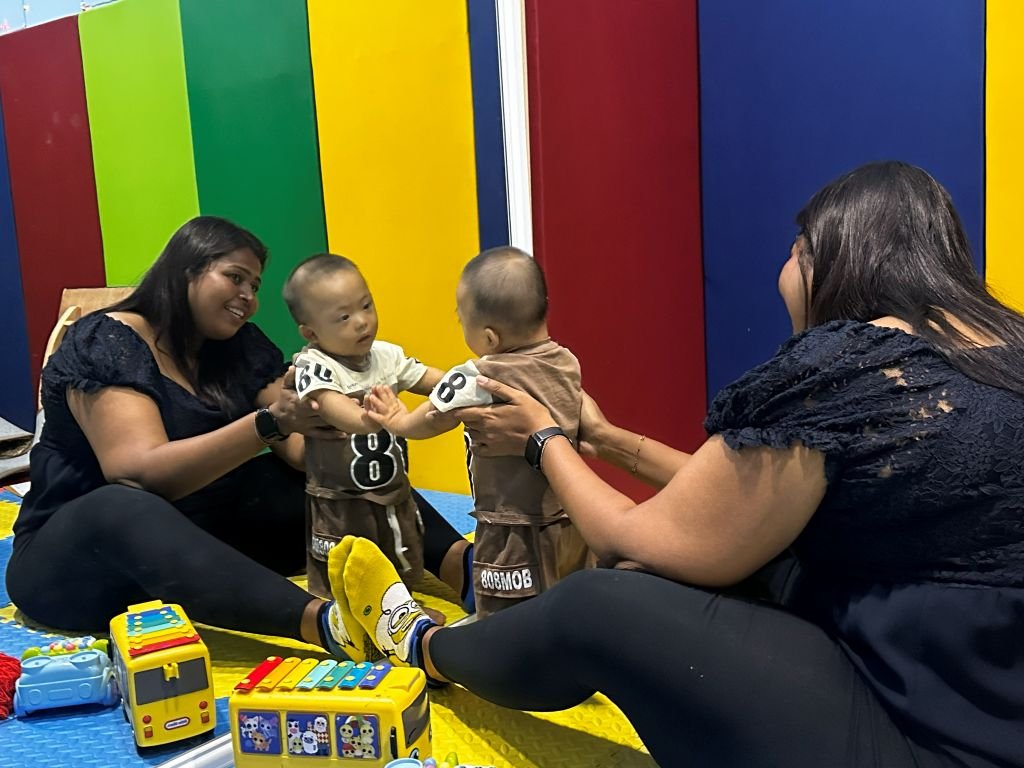
Supporting Movement, Independence, Participation, and Quality of Life
Depending on the child's needs, support may focus on movement, posture, balance, strength, coordination, mobility, fine motor skills, self-care, communication, play,
school participation, and independence. Our approach looks beyond a child's physical movements and considers how their abilities affect what they can actually do at home, at school, and in the community.
The goal is not to make every child move in the same way. It is to help each child develop their abilities, participate in meaningful activities, and achieve greater independence.
What Is Cerebral Palsy?
Common Challenges
- A child with CP may experience difficulties with:
- • Muscle tone
- • Movement
- • Posture
- • Balance
- • Coordination
- • Strength
- • Motor planning
- • Walking or mobility
- • Hand function
- • Fine motor skills
- • Communication
- • Feeding
- • Self-care
Who Can Benefit From the Cerebral Palsy Development Program?
The program may support children who have Cerebral Palsy, motor delays, difficulties with balance or coordination, increased or reduced muscle tone, muscle weakness, difficulty with mobility, difficulties with fine motor skills, need support developing independence, have difficulty participating in daily activities, or need support with school participation.

Cerebral Palsy
Children with CP and their families.

Motor Delays
Children showing delays in movement milestones.

Balance and Coordination
Children with balance or coordination difficulties.

Muscle Tone
Increased or reduced muscle tone affecting movement.

Mobility Difficulties
Children needing support with movement and mobility.

Fine Motor Skills
Children needing support with hand function and fine motor tasks.

Independence Skills
Children developing independence in daily activities.

School Participation
Children needing support with school activities and routines.
How Does Cerebral Palsy Affect Everyday Life?
Functional Impact
A child may have enough strength to reach for a toy but have difficulty coordinating their hand movement accurately. Another child may be able to walk but become tired quickly and therefore have difficulty participating in a full school day. Understanding these functional differences helps therapists develop more meaningful goals.
What Can Therapy for Children With Cerebral Palsy Focus On?
Therapy for children with CP can address a wide range of areas depending on the child's individual needs and goals.
Gross Motor Development
- • Head and trunk control
- • Rolling
- • Sitting
- • Crawling
- • Standing
- • Walking
- • Climbing
- • Running
- • Balance
- • Coordination
- • Functional movement
Strength and Endurance
Some children with CP experience weakness or fatigue that affects participation. Therapy may incorporate activities designed to support functional strength, endurance, postural control, activity tolerance, and participation in physical activities.
Balance and Coordination
Children may work on maintaining balance, changing positions, reaching while maintaining stability, coordinating movements, navigating different surfaces, and moving safely through their environment.
Mobility and Functional Movement
Mobility goals may include moving around the classroom, walking between activities, navigating stairs, getting in and out of a chair, moving from the floor to standing, and using appropriate mobility equipment when required.
Fine Motor and Hand Function
Intervention may support reaching, grasping, releasing objects, bilateral hand use, hand-eye coordination, manipulating objects, pencil control, using classroom materials, and self-care tasks.
Independence and Activities of Daily Living
Therapy may include functional activities such as dressing, eating, brushing teeth, washing hands, toileting, using utensils, managing belongings, and participating in classroom routines.
Communication and Participation
Support may include speech and language therapy, communication strategies, AAC, PECS, partner-supported communication, and participation in classroom and social activities.
Positioning and Equipment
Professionals may consider seating and positioning, mobility supports, orthotic recommendations, adaptive equipment, and environmental modifications based on an appropriate assessment.
How Hope Kids Supports Children With Cerebral Palsy
Hope Kids provides individualized support for children with Cerebral Palsy through comprehensive assessment, goal setting, physiotherapy, occupational therapy, educational support, and family collaboration.
Individual Assessment
We begin by understanding the child's current abilities and how CP affects their daily participation across movement, posture, muscle tone, strength, balance, coordination, mobility, fine motor skills, functional independence, communication, school participation, and family priorities.
Individualized Goals
Goals are based on what is meaningful for the individual child — from movement and mobility goals to school participation and independence goals.
Physiotherapy
Physiotherapy can support gross motor development, mobility, balance, strength, coordination, postural control, physical endurance, and functional movement.
Occupational Therapy
Occupational Therapy may complement physiotherapy by addressing fine motor skills, hand function, self-care, school participation, adaptive skills, and functional independence.
Developmental and Educational Support
Children with CP may also have educational or developmental needs. Support may include Special Education, Early Intervention, School Readiness, ADL Training, Communication support, Structured learning, and Parent education.
Professional Expertise
Ms. Ranjani Poobalan has a Master's degree in Pediatric Physiotherapy and is qualified to assess and provide physiotherapy services for children with Cerebral Palsy and other pediatric developmental and movement needs.
Family Involvement
Parents and caregivers are supported to understand how to encourage safe movement at home, support independence, incorporate practice into daily routines, position or assist their child appropriately, encourage participation in play, and support self-care skills.
What Does Progress Look Like?
Progress in Cerebral Palsy does not look the same for every child. It might mean sitting with greater stability, standing with less assistance, walking farther, moving more safely, using both hands during an activity, holding a pencil more effectively, eating more independently, participating in playground activities, managing more steps of a dressing routine, or participating more comfortably in school.
Benefits of the Cerebral Palsy Development Program
The program aims to help children with CP develop greater functional ability, independence, and participation in everyday life.
Improved Functional Movement
Children may develop greater ability to perform movements needed for everyday activities.
Greater Mobility
Therapy can support safe and functional movement within the child's environment.
Increased Independence
Children can gradually develop greater independence in self-care, school, and daily routines.
Improved Participation
Intervention focuses on helping children participate in activities that matter to them and their families.
Greater Confidence
Successfully developing and using new skills can support a child's confidence and willingness to participate.
Family Confidence
Parents can gain a clearer understanding of their child's abilities and practical ways to support participation at home.
Why Choose Hope Kids?
Hope Kids offers specialized pediatric physiotherapy and occupational therapy for children with Cerebral Palsy, with a focus on functional goals, family partnership, and real-life participation.
Pediatric Expertise
Specialized physiotherapy and occupational therapy for children with CP.
Individualized Assessment
We consider each child's unique movement, developmental, functional, and participation needs.
Multidisciplinary Approach
Physiotherapy coordinated with Occupational Therapy, Special Education, Speech Therapy, ADL Training, and Early Intervention.
Functional Goals
We focus on skills that matter in the child's real life, not simply isolated exercises or physical milestones.
Family Partnership
Families are supported to understand goals and incorporate appropriate strategies into everyday routines.
Participation and Independence
The goal is to help children participate as fully and independently as possible at home, school, and in the community.
Frequently Asked Questions
Contact Hope Kids
If your child has Cerebral Palsy or difficulties with movement, mobility, coordination, or independence, Hope Kids can provide an individualized assessment and help identify appropriate developmental and therapeutic support. Our Cerebral Palsy Development Program in Phnom Penh, Cambodia brings together pediatric physiotherapy, occupational therapy, education, functional skill development, and family support according to each child's needs. The goal is not simply to improve movement. It is to help children use their abilities to participate, communicate, learn, play, and become as independent as possible.
Contact UsContact Hope Kids
If your child has Cerebral Palsy or difficulties with movement, mobility, coordination, or independence, Hope Kids can provide an individualized assessment and help identify appropriate developmental and therapeutic support.